



Blackroad Coffee
Panama, and diversity
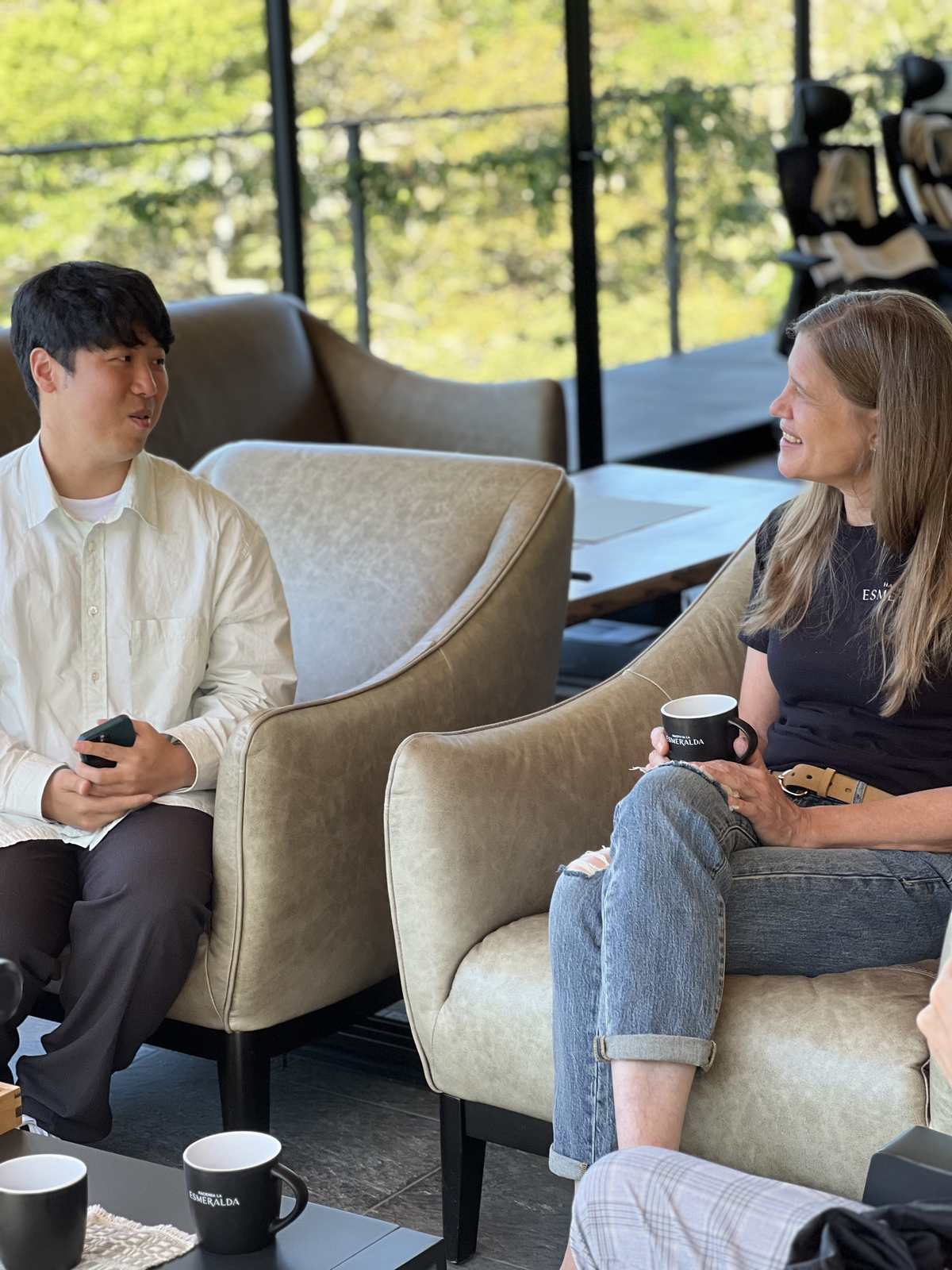
I remember the first day I went to Panama.
It was 2023. Until then I disliked Panama. I believed greedy people were inflating the price of coffee with marketing.
I was always on the other side. Emerging origins in Asia, small farms with no name.
The value BlackRoad wanted to protect was “the diversity of coffee.” Finding new coffees and sharing that experience with our guests. That was why we did coffee.
But the more origins I visited, the more unsolved problems piled up.
First, the farms were diverse but the experience was not. As countries and farms add up, the menu fills with dozens of coffees. But is that really diversity? Looking back, it was often just a list of complicated names. A farm visited once a year; a schedule of five to ten farms in a day. Sometimes I could not match a farm to its owner’s face. There was no way to carry the value of a coffee I did not really know to a guest.
The next problem hurt more. The coffee I tasted at origin and the coffee that arrived in Korea were different. Sometimes it was a pre-harvest sample and the actual harvest tasted different; sometimes it changed over months at sea. I can hardly remember a coffee that was great at origin and better in Korea.
The last was my own capacity. A unit called a micro lot is usually 100 to 200kg. Capital was short, and if I brought in 100kg of one coffee our brand could not absorb it all. Buying beyond our means, then failing to sell it. That repeated every year.
Around then I went to Panama. It was after Ethiopia, Honduras, Costa Rica, Guatemala, Colombia and Mexico. Shouldn’t I go at least once. That was about the depth of it.
At other origins I was always welcomed. Panama was different. It is where the world’s roasteries and world champions come to find competition coffee. Among them I was an unknown small roastery from Korea, a café owner on a sightseeing trip. At Elida, other buyers began cupping before my tour had even finished.
That year I could not buy a single coffee from a farm. Every coffee I said I would take had gone to another buyer or was sold out.
That is how my bad blood with Panama began. I should have stopped there.
Back in Korea, every time I tasted the Geisha I had bought in Costa Rica, something was missing. Not the Geisha that arrives in 100kg lots, but the Panamanian Geisha I could only bring back 5kg of — that was what kept coming to mind.
That year I won the first place coffee at Best of Panama. Exactly 2kg. About 3.8 million won per kilo, the most expensive coffee of my life at that point. I offered it at almost cost at Seoul Cafe Show and it sold out in a day. A long line formed in front of our booth, and the Panamanian producers who were there as guest baristas saw that line.
That was the day I first spoke properly with Wilford Lamastus. The same farm owner who had brushed me aside at Elida.
“Tommy, do I even have your contact?”
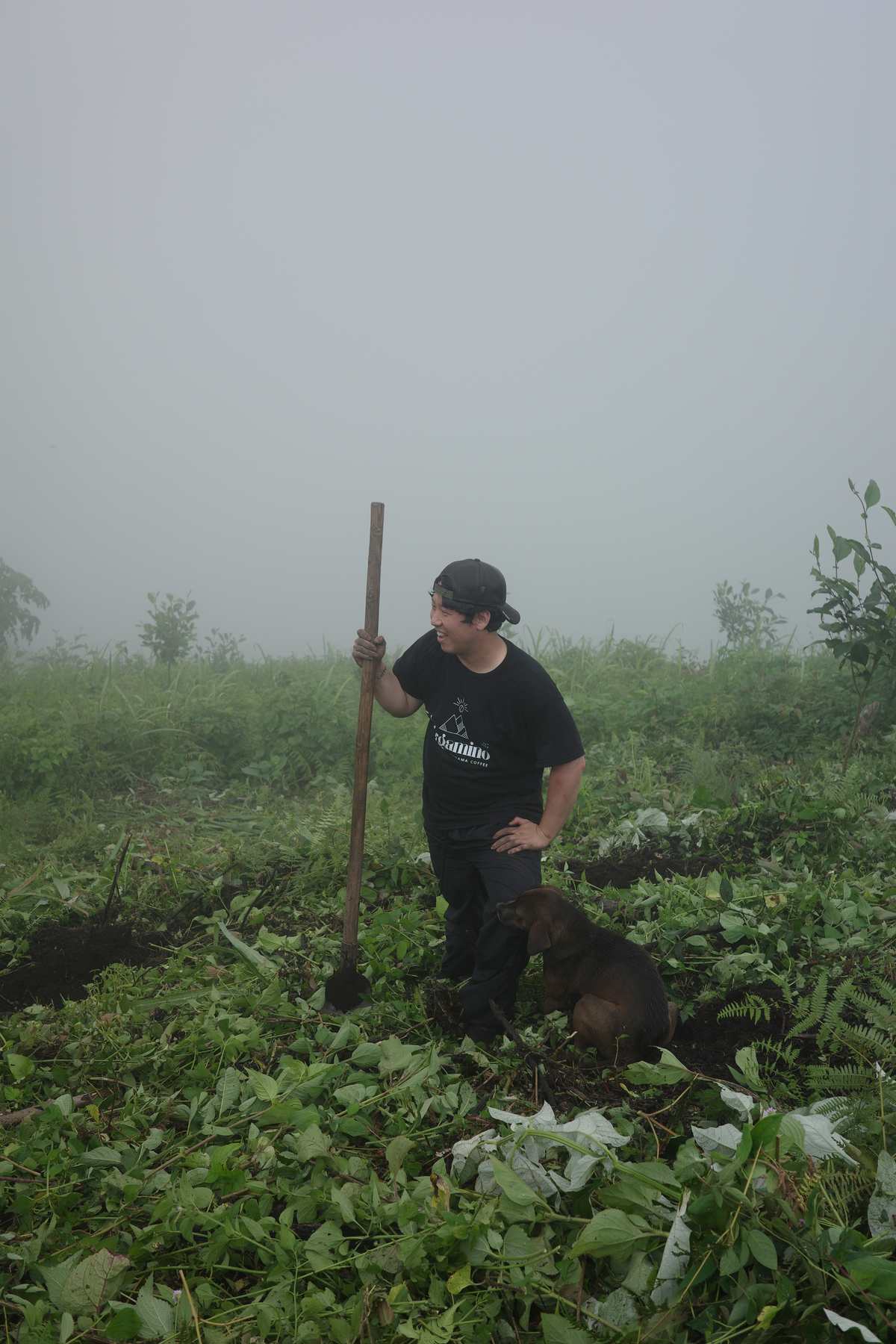
Back in Korea I thought about it for a long time. And I realised: Panama had already solved every problem I could not.
In Panama the experience changed farm by farm, lot by lot. Even within one farm, a different plot, altitude or process makes an entirely different coffee. The variety was in the flavour, not in the names.
Most of them are expensive coffees, so they travel by air. The coffee I tasted on the cupping table arrives in Korea exactly as it was. Sometimes it even arrives better.
Lot sizes are 2kg, sometimes 0.5kg. Even a small roastery can hold a coffee exclusively. In exchange, you have to compete with the whole world for it.
The diversity we had been looking for was right there.

After that I bet everything on Panama. I started importing green coffee and travelled the farms with a camera.
In 2024 I won the Elida Aguacatillo Honey at the Lamastus auction. USD 13,518 per kilo — at the time, the most expensive coffee in the world. In 2025 I brought Eden, the most expensive lot in the history of the Esmeralda auction, to Korea. There had not even been a sample, and fewer than forty people in the world have drunk that coffee, at our Seongsu shop.
After serving as a guest cupper at Best of Panama in 2024 and 2025, in 2026 I sat at the cupping table as a judge. The people who did not know me on my first visit now know the name BlackRoad.
Visiting the farms every year with a camera in hand, I have come to understand these people’s lives and philosophy a little better each time.
Life is funny. I never imagined I would fall for Panama this hard.

I believe today’s specialty coffee market splits in two. Panama, and everything else.
Inside a word that is no longer special — specialty — Panamanian coffee is becoming the symbol of premium. Of course, it may look that way to me because I love Panama too much.
I spend one to two months in Panama every year. Early in the year I scout farms and cup. I reserve coffees other buyers don’t know yet, before the harvest. I go back in June and July to judge Best of Panama, and take one more sweep of the green coffee held back until then. In between, I keep looking for good coffee with our partner on the ground in Panama.
Imports of around 100kg in 2023 have grown to more than three tonnes of Panamanian Geisha alone this year, in 2026.

In 2027, BlackRoad becomes a “department store of Panamanian coffee.” We are gathering coffees from every farm in Panama in one place. Beyond Korea, to become the best Panamanian coffee company in the world. That is the next goal.
The person who disliked Panama most ended up building a company that collects only Panamanian coffee.
There are three ways to experience BlackRoad coffee today.
Our offline shop is BlackRoad Seongsu, which runs entirely by reservation. You can book through the link below.
https://m.booking.naver.com/booking/6/bizes/1136092/
Most of the coffees I bring back are sold on this website. And they are also available as green coffee.
Global sales are currently roasted coffee only. If you would like to become our distributor, please contact us at the email below.
Thank you.
cuppingpost@naver.com
@cuppingpost
@black_road_coffee
@black_road_seongsu
